Installment Loans for Bad Credit
1F Cash Advance sets no minimum credit score. We decide on verified income rather than your credit file, which is why borrowers with damaged credit are often approved. Fixed monthly payments make it easy to plan your budget and always know exactly what you owe.


1F Cash Advance has been helping people find emergency loans since 2019. We are a licensed company and operate under state laws. Over 140,305 consumers have already used our services, both online and in stores.
Each of our articles is reviewed by industry experts and updated regularly. We ensure accuracy through daily audits and automated updates. Learn more about our editorial standards.
1F Cash Advance has been helping people find emergency loans since 2019. We are a licensed company and operate under state laws. Over 140,305 consumers have already used our services, both online and in stores.
Each of our articles is reviewed by industry experts and updated regularly. We ensure accuracy through daily audits and automated updates. Learn more about our editorial standards.
Key Takeaways
- No legitimate lender can guarantee you approval before verifying your identity and assessing your financial profile.
- “Guaranteed” loans are those partially covered by the federal government if a borrower defaults. Bad-credit installment loans refer to borrowing options with high approval odds that focus on a borrower’s income instead of relying on their credit scores.
- Installment loans available through 1F Cash Advance can be used for a wide range of needs, including debt consolidation, home improvements, or family emergencies.
- Improving your credit will help you seek better rates and terms in the future.
What is an Installment Loan?
An installment loan is a financing option where you receive a fixed amount and repay it in equal monthly payments over a set contract period. Through 1F Cash Advance, you can get a loan for any lawful purpose. The amount, rate, and payment schedule are outlined before the agreement is signed.
Our lenders do not focus on your credit score, so applicants with steady income and valid documentation are often approved. This makes installment loans a flexible option for those who need fast and predictable funding, even with past credit issues.
What the word “guaranteed” means in lending
In regulated lending, a guarantee is a promise to the lender, not to the borrower. The USDA guaranteed home loan program is the clearest example. The federal government covers part of the lender’s loss if the loan fails. Even so, USDA’s training material for lenders states that USDA does not underwrite loans, and that deciding whether an applicant is creditworthy is the lender’s job. Lenders can also add their own rules on top, including minimum credit scores.3 That is the strongest guarantee available in consumer lending, and it still does not promise any individual borrower an approval.
What gets checked when your score is thin
If you have little or no credit history, our lending partners look at documented income rather than a score: recent pay stubs or deposit history, the length and regularity of your income, and your existing monthly obligations. Bank-statement activity often carries more weight than a thin credit file.
Common Uses
Emergency installment loans are often used to cover essential expenses that cannot be postponed. Common examples include:
- Unexpected medical or dental bills
- Car repair or the replacement of critical vehicle parts
- Urgent home repairs, such as heating, plumbing, or electrical fixes
- Overdue rent or utility bills to prevent disconnection
- Family emergencies that require travel
- Debt consolidation into one monthly payment
Bad Credit? You May Still Qualify
1F Cash Advance does not require a minimum credit score. Eligibility is determined by proof of stable income. Applicants with freelance income, government benefits, unemployment payments, or a pension can qualify. Steady income is the main requirement for approval, regardless of previous credit history.
Typical Score Bands and What Lenders Generally Do
| Score | What usually happens |
|---|---|
| 720 and above | Counted as prime. Widest product range at the lowest available rates. |
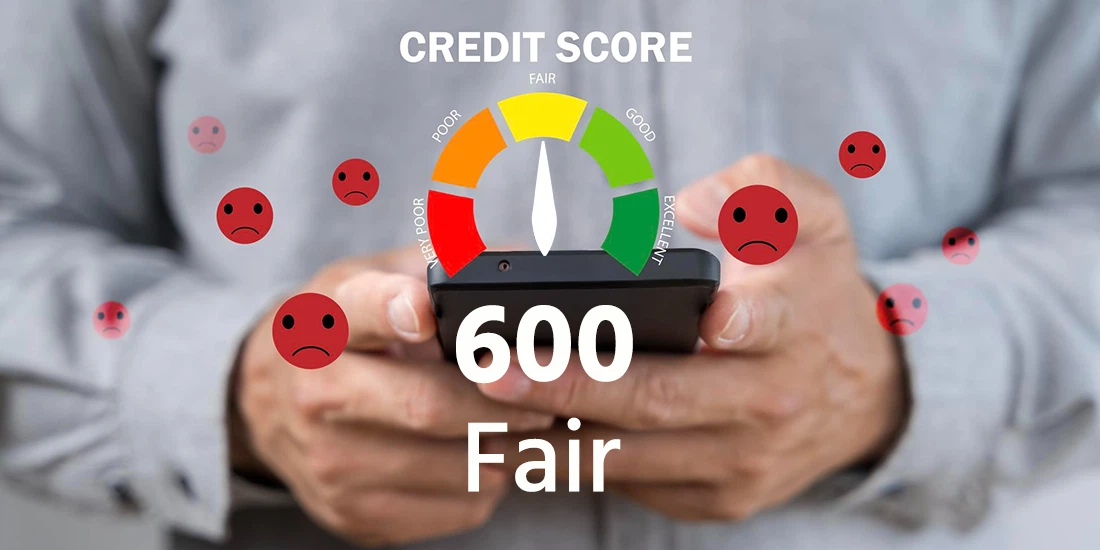
| 580 to 720 | Approval is often possible, at higher rates than a prime borrower would get. |
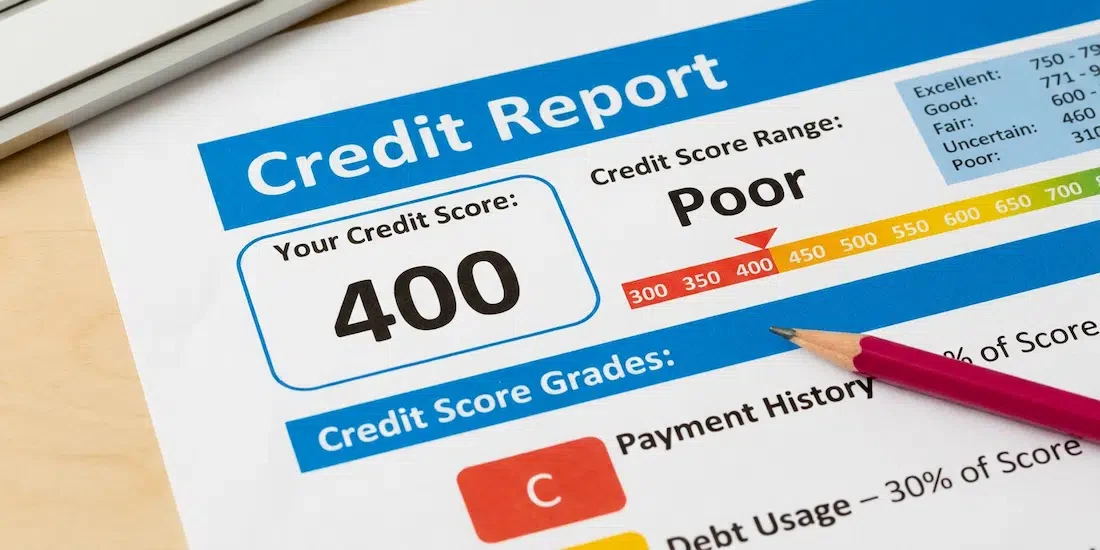
| Below 580 | Mainstream lenders often decline. Income and alternative data carry more weight. |
A score is a snapshot rather than a permanent record. The heaviest weight sits on recent activity, so older problems fade as newer positive data builds up.5
3 Steps to Get Your Loan
Applying for a bad-credit installment loan through 1F Cash Advance takes just a few minutes. Here’s how it works:
Complete the online form
Enter your personal and income information. Attach the required documents for verification.
Apply NowGet your decision
Pre-qualification uses a soft inquiry that does not affect your credit score, and most applicants get a preliminary decision in minutes.
Receive your funds
Once you accept and sign the agreement, funds are deposited directly into your bank account by the next business day.*
*Funding times vary depending on the time and day of application. Applications submitted before 10:30 am local time are funded the same day. Anything submitted later, on weekends, or on holidays will be processed the next business day.
Eligibility Requirements
Here’s what you’ll need:
- Proof of regular, verifiable income (at least $1,500/month)
- Valid government-issued photo ID
- Active checking or savings account
- U.S. residency or citizenship
- Minimum age of 18
- Working phone number and email address
Pros and Cons of Installment Loans
A personal installment loan can help you get quick cash to cover larger expenses, but it still comes with its own set of pros and cons.

Pros
- Convenient repayment schedule. You can choose a shorter or longer repayment period depending on your current needs, budget, and preferences.
- Predictable payments. Your loan payments are fixed, so you will always know how much you owe and when.
- Higher loan amounts. Installment loans come with borrowing limits that suit different purposes.

Cons
- More interest paid. A longer repayment period results in a higher total cost of the loan.
- Extra fees. Besides interest rates, you may be charged origination fees, late fees, or prepayment penalties, depending on your lender.
- Potentially high APRs. People with bad credit are likely to get higher APRs, making their loans cost more.
Terms and Rates
Installment loans are available in amounts ranging from $500 to $5,000, with repayment periods of 2–24 months. Your APR depends on your state and your financial profile, and ranges from 16% to 200%. You repay the loan in fixed, equal monthly installments, making it easy to plan your budget.
Below is an example table with typical rates and payment calculations:
| Amount | Term (months) | APR | Monthly Payment | Total Interest | Total Repayment |
|---|---|---|---|---|---|
| $1,000 | 6 | 18% | $175.53 | $53.15 | $1,053.15 |
| $1,000 | 12 | 199% | $197.10 | $1,365.17 | $2,365.17 |
| $1,500 | 12 | 92% | $195.62 | $847.42 | $2,347.42 |
| $2,500 | 12 | 24% | $236.40 | $336.79 | $2,836.79 |
| $4,000 | 18 | 28% | $274.69 | $944.45 | $4,944.45 |
| $5,000 | 24 | 36% | $295.24 | $2,085.69 | $7,085.69 |
Soft vs. Hard Credit Check
The difference is narrower than most borrowers assume, and it matters if you are about to submit several applications.
Soft inquiry
- Does not appear on your credit report.
- Happens when you check your own credit, or when a lender pre-approves you for an offer.4
What scores never look at
Scoring models do not use your age, income, employment, occupation, employer, marital status, or bank balances. VantageScore also excludes race, color, religion, nationality, sex, and where you live or shop. Lenders assess income separately for that reason. It is never inside the score.
Things to Know About a Soft Credit Check
What Moves Your Score, and by How Much
The two most widely used models weigh the same behaviors differently. Here are factors that make up your FICO score:
| Factor | FICO |
|---|---|
| Payment history | 35% |
| Amounts owed / usage | 30% |
| Length of history | 15% |
| New credit/inquiries | 10% |
| Credit mix | 10% |
VantageScore 3.0 uses the following six factor categories to calculate your credit score:
| Factor | VantageScore 3.0 |
| Payment history | 40% |
| Depth of credit | 21% |
| Percentage of credit limit used | 20% |
| Balances | 11% |
| Recent credit | 5% |
| Available credit | 3% |
- One late payment costs a lot. Once you are more than 29 days late on a credit card, personal loan, car loan, mortgage, or other type of debt, it gets reported and can cost 100 to 150 points. For some loan products, late payments may be reported once you are more than 60, 90, 150, or 180 days late.1
- Closing a card usually hurts. You lose that card’s limit, which pushes your overall usage ratio up. If you were carrying a balance on the card you closed, the balance still counts while the available credit no longer does. Closed accounts also stay on file for years.
- Balance transfers can misfire. Moving more than half of a new card’s limit onto it triggers a high-usage penalty on that account.
- Avoiding credit entirely is not neutral. With no recent activity, you may have no score at all, and an unscoreable file is generally treated as high risk.
- Installment loans help your mix. On-time payments across both installment and revolving credit score better than revolving credit alone.4, 5, 6
Installment Loan Alternatives
If an emergency installment loan does not fit your situation for some reason, here are other options you can consider.
Personal Loans
A personal loan lets you borrow up to $50,000 for a period of 12–60 months, making it an ideal solution for long-term needs and major expenses. APRs usually range from 5.99% to 35.99%. While good credit is typically needed to qualify, some lenders may offer options for people with less-than-perfect scores. Through 1F Cash Advance, you can find a personal loan of up to $10,000 with no minimum credit score requirements.
Secured Loans
Secured loans are financing products backed by your property or other valuable assets. As you pledge an item to secure an application, lenders see it as a repayment guarantee, which reduces the risk and makes them more willing to work with you.
The amount you can borrow usually depends on the asset’s market price, and the repayment period varies from 1 month to 30 years. APRs tend to be lower than those on similar unsecured options, although some products may have rates of around 300%. Secured loan examples include car title loans, savings-secured loans, home equity loans, and pawn shop loans.
Payday Alternative Loans
Offered by credit unions, these loans have the same installment structure while offering lower APRs capped at 28% plus an application fee of up to $20. Loan amounts and repayment terms depend on the PAL type. PAL I loans offer $200–$1,000 for 1–6 months with a minimum membership term of 1 month, while PAL II allows you to get up to $2,000 with a repayment period of 1–12 months (no minimum membership required). To qualify, you need to be a credit union member, often for at least one month. Applicants with bad credit are considered, but a hard credit check may be part of the underwriting process, depending on the credit union.
Credit Cards
If you need money for ongoing projects or those with uncertain final costs, a credit card can provide more flexibility. It allows you to borrow up to a limit and pay interest only on what you actually use. If you clear the balance by the end of the billing cycle (usually one month), no interest will apply. Some issuers also offer credit cards with 0% APR promotional periods.
Payday Loans
If you need a small amount of up to $1,000 to cover a short-term cash shortfall, a payday loan may suit you better. This option provides financing for 14–30 days without creating long-term debt. Just make sure you have a solid repayment plan, since short payback times, along with high APRs (around 260%–780% on a 14-day loan), can make payday loans difficult to manage.
Cash Advance Apps
Use a cash advance app if you need early access to a portion of your next paycheck. This tool can help you get from $25 to $500 (rarely $750 or $1,000) for up to 30 days, often without charging traditional interest. To receive a loan, you typically need to install the app, set up an account, and link your bank account to it. The app will automatically collect the amount owed when your next paycheck arrives. Extra fees for instant deposits or monthly access to services can apply and push an effective APR to 300%–400%.
Credit Union Hardship Programs
Credit union hardship programs are designed for members who face financial challenges caused by a job loss, illness, or disaster. CUs like LAFCU or Premier America offer this type of emergency assistance with no hard credit check required. Hardship programs often have lower interest rates and come with several benefits, including reduced payment plans, term modification, and the ability to skip one or more payments or extend the repayment term.
Co-Signed Loans
Loans with co-signers are options with shared responsibility. Similar to providing collateral, you add an individual with good credit and high income to your application as an extra repayment guarantee. If you fail to repay on time, this person will be liable for making loan payments. This reduces risks for lenders but comes with several considerations for both the primary borrower and a co-signer. Missed payments can affect both parties’ credit.
Peer-to-Peer Loans
Peer-to-peer loans are offered through specialized platforms that connect borrowers with individual investors. Traditional financial institutions are typically not involved, which can mean faster decisions and less paperwork. The interest rate, amount, and repayment term are determined based on your risk level and the conditions set by a specific investor. APRs are often lower compared to bank loans, and you don’t need good credit to qualify. However, this option offers fewer consumer protections than regulated lenders.
Avoid Predatory Lenders
Scammers and fraudsters are always waiting to take advantage of people under financial pressure. Before committing, take a step back and review any offer carefully.
Predatory lenders usually do not fully disclose APRs and fees and hide specific conditions in the fine print. If something is unclear, ask for an explanation. Do not sign anything until you get a comprehensive answer.
Keep in mind that time-sensitive offers with a short application deadline for “special terms” are a common trick to distract you from unreasonable loan terms.
Avoid lenders who promise 100% guaranteed approval without credit and/or income verification. In a July 2026 letter to federal banking regulators, attorneys general from 21 states and the District of Columbia wrote that where rate limits are absent or preempted, lenders can lend without regard for whether the borrower can repay, because a high enough interest rate lets them profit even when the loan defaults.2
Never agree to pay insurance or processing fees before funding, and do not deal with a lender who pressures you to extend the loan.
Key Considerations Before Applying
Even if your credit is not great, there are still steps you can take to seek a reasonable offer. Here are a few things you need to pay attention to before you choose a loan:
- Pre-qualifying. Choose lenders offering the ability to pre-qualify so that you can review your potential loan terms and compare multiple offers with no impact on your credit score.
- Watch for APRs. An APR shows the real annual cost of your loan, making it easier to compare different options. While payday and title loan fees may not seem as high, their APR often exceeds 300%–400%.
- Provide proof of steady income. When your credit is low, your income becomes the major factor lenders use to determine your eligibility. If you have multiple verifiable income sources, provide documentation for all of them.
- Credit reporting. If you want to improve your credit, check whether the lender you choose reports on-time payments to major credit bureaus. Just note that such loan providers usually perform hard credit inquiries that will temporarily lower your credit score.
Why 1F Cash Advance
At 1F Cash Advance, we focus on making emergency borrowing simple and stress-free, even if you’ve faced rejections from other lenders. Here’s what sets us apart:

Fast Secure Application
Online applications are available 24/7, take only minutes to complete, and keep your data protected.

Clear Upfront Information
All terms, fees, and payment details are presented clearly before you sign—no unexpected costs that are not outlined in your loan agreement.

Personal Support Any Time
You can contact us directly for quick answers or visit our locations for in-person help with your loan questions and applications.
FAQ
What’s the maximum borrowing limit for an installment loan?
You can borrow up to $5,000. The exact amount you qualify for will be determined after we review your personal information and will be clearly stated in your loan agreement.
How do installment loans for bad credit differ from payday loans?
Installment loans allow you to borrow up to $5,000 and repay in fixed monthly payments over 2–24 months. Payday loans are short-term loans, typically capped at $1,000, and in some states, the maximum amount may be even lower. Full repayment of a small loan is required on your next payday.
How can I boost my chances of getting approved?
Ensure all information is accurate and all required documents are submitted. Applicants with a stable, verifiable income and a complete application have a high chance of approval.
When will I have access to my funds after my application is approved?
Funds are available within 24 hours of approval. If you complete your application early in the morning, you may receive the money that same day. In-store applicants can also access cash immediately.
How does 1F Cash Advance protect my personal and financial information?
Your data is secured using advanced encryption technology and strict privacy standards. We do not share your information without your consent.
What happens if I am unable to make a payment on time?
Missed payments result in penalties specified in your loan agreement. Contact your lender if you experience difficulties with payment. Many are willing to accommodate by offering a deferment or extended terms. Overdue accounts may eventually be sent to collectors, which can hurt your credit. If your account is sent to a collection agency, you have the right under the Fair Debt Collection Practices Act to request written verification of the debt and dispute it within 30 days from the moment they first contact you. Failing to repay a personal loan is a civil matter, not a criminal offense. You cannot be jailed for unpaid consumer debt.
What if I'm self-employed?
Self-employed individuals can still qualify if they can provide proof of steady income in the form of bank statements, tax returns, or 1099 forms. Your income should be high enough to cover your loan payments on top of your existing monthly expenses and current debt obligations, if any.
What is the difference between an installment loan and a line of credit?
With an installment loan, you receive the funds in one lump sum and make fixed monthly payments over a set period. Interest applies to the outstanding balance. A line of credit allows you to use money within a limit and pay interest only on the amount you borrow. Once repaid, you can use the funds again during the draw period. After this period ends, you start repaying the outstanding balance over a set term with no ability to borrow.
Sources
- 1 Texas Office of Consumer Credit Commissioner — 2025 Report on Availability, Quality and Pricing of Certain Financial Services and Consumer Loan Products. December 2025.
- 2 Attorneys General of 21 States and the District of Columbia — Letter to Federal Prudential Regulators Regarding Bank Charters for High-Cost Lenders. July 15, 2026.
- 3 U.S. Department of Agriculture, Rural Development — Single Family Housing Guaranteed Loan Program, New Lender Training Part 3: Credit and Ratio Analysis. March 2025.
- 4 myFICO (Fair Isaac Corporation) — What’s in my FICO® Scores. Accessed August 12, 2026.
- 5 Consumer Financial Protection Bureau — How long does information stay on my credit report? Last reviewed September 2025.
- 6 VantageScore Solutions — VantageScore 3.0: Better predictive ability among sought-after borrowers. Accessed August 12, 2026.