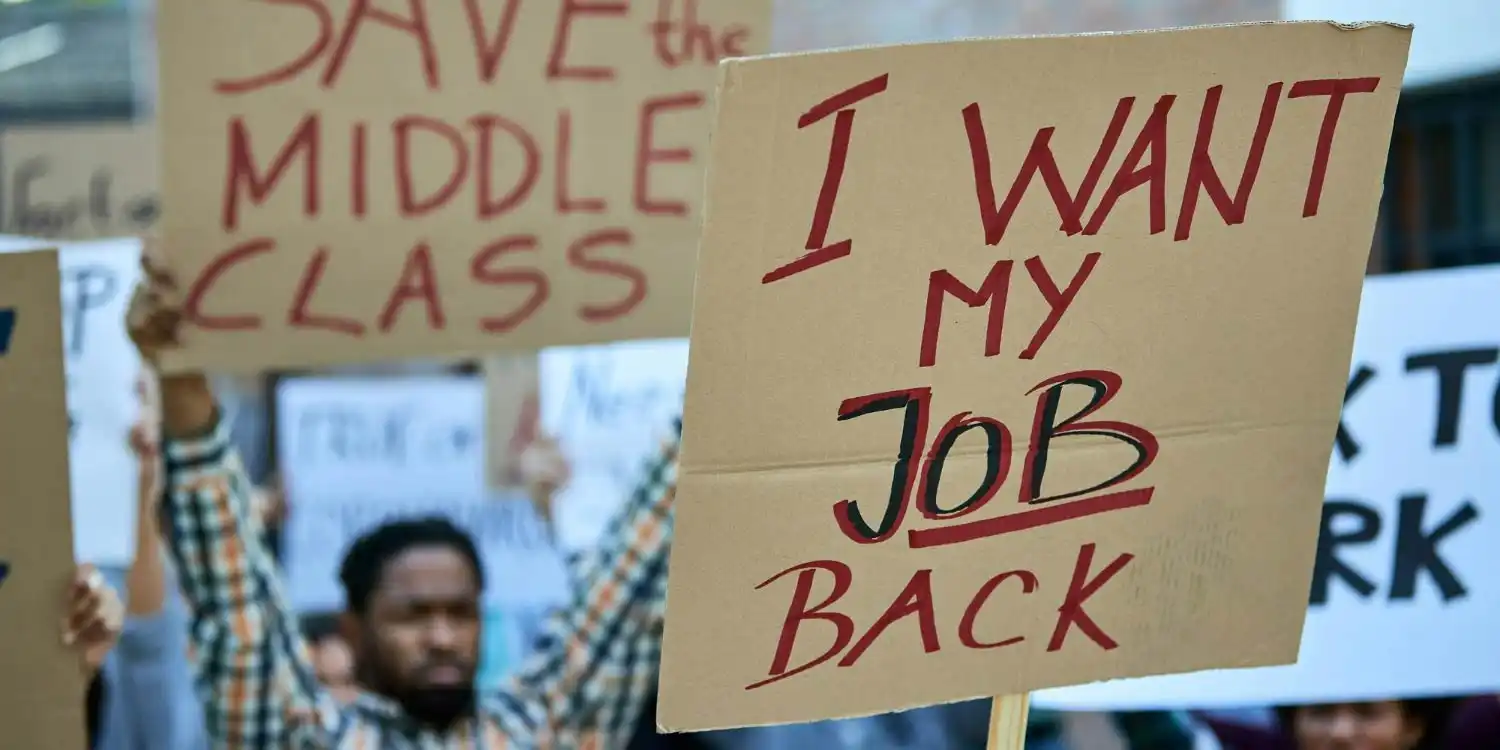
How to Get a Loan for the Unemployed and Manage It Wisely
17 Min Read
 Reviewed by Michael Lefler
 - Key takeaways
- Types of loans for the unemployed
- What factors do lenders consider for approval?
- How to get a Loan without a job
- How to repay a loan without official employment
- Things to consider before taking out an unemployment Loan
- Alternatives to emergency loans available with no job
- Bottom line
- FAQ
Key Takeaways
- Even without a steady job, you can still qualify for loans by showing alternative income sources, such as benefits, pensions, rental payments, or freelance work.
- Different loan options exist — from payday and installment loans to secured and co-signed loans — each with specific costs, terms, and risks that should be weighed carefully.
- Responsible borrowing means asking for only what you need, checking the full cost, and considering safer alternatives first.
Anyone who has borrowed from a bank knows the process usually requires a stack of documents, including proof of employment. However, there has been a rise in remote work after the pandemic in the U.S., and many gig workers are unable to provide this document. Homeowners with rental income and people who lose their jobs and need money for temporary income shortfalls can face the same hurdle.
However, it’s still possible to get a personal loan without traditional employment and income verification. While the lack of official employment complicates this task, it does not make it impossible.
Types of Loans for the Unemployed
Not having a steady paycheck doesn’t mean you’re out of options. There are several types of loans available to unemployed people, such as retirees, students, stay-at-home parents, and freelancers. Each works a little differently, with its own rules, timelines, and costs.
Payday loans
Payday loans are among the most accessible options when you don’t have traditional income. Typically, they offer amounts of up to $1,000, depending on your state and income. The repayment is made in one lump sum within 2–4 weeks. Approval often takes minutes, and lenders typically don’t require a job letter, only an ID and an active bank account. Payday loans usually have a flat fee of $10–$30 for each $100 advanced, resulting in high APRs of 260%–780% for a standard 14-day loan.

Pros:
- Quick approval, often in minutes
- No traditional employment proof required
- Money can be deposited in your account the same day

Cons:
- Very high costs, especially if not paid on time
- Extra fees may apply
- Short repayment period of up to 30 days
- High risk of debt cycle
- Not available in every state
Installment loans
Installment loans let you borrow up to $5,000 and repay it in fixed monthly payments. The repayment terms range from 2 to 24 months. This predictability makes it easier to plan your budget, even when your income is inconsistent. APRs for borrowers with good credit are 6%–36%, but if your credit is poor, lenders may charge higher APRs that may reach 200%.
Pros:
- Predictable monthly payments
- Longer repayment periods
- Higher loan amounts are available
Cons:
- Potentially high APRs for poor credit
- Some lenders charge origination or late fees
- Automated Clearing House (ACH) auto-pay may trigger overdraft or non-sufficient funds (NSF) fees if funds are insufficient 3
Personal loans
Traditional banks are often reluctant to lend to the unemployed without a co-signer or collateral, as their primary requirements are a steady income, employment history, and a good credit score. But online lenders can be more flexible.
In mid-2026 the average personal loan at a commercial bank carried an interest rate of 11.86%.8 You can get up to $15,000, with terms of up to 60 months. Instead of a pay stub, you can show benefit letters, bank statements, or freelance app screenshots to qualify.
Pros:
- Larger loans for big purchases and debt consolidation
- Longer terms mean smaller monthly payments
- Competitive rates if your credit is decent
Cons:
- Hard to qualify without collateral or a co-signer
- APRs are still high for poor credit
- Hard credit checks are usually performed
Title loans
If you own a car, you can use its title as collateral to take out a title loan. Loan amounts are usually limited to 25%–50% of your car’s value, and terms are short, often 15–30 days. The process is quick and doesn’t rely on job status. However, APRs may be very high, often around 300% APR. Car repossession is a real and common outcome. If your income is unstable, a title loan against your primary vehicle can leave you without transportation to seek new work.
Pros:
- Fast approval and cash access
- Doesn’t require employment verification
- Larger amounts compared to payday loans
Cons:
- Extremely high APRs
- Risk of car repossession if you default
- Very short repayment windows
Home Equity Loans and HELOCs
If you’re currently out of work but own a home, a home equity loan or HELOC can be one of the few ways to access larger sums of money. These options let you borrow against the equity you’ve built up—either as a lump sum (home equity loan) or a flexible line of credit you can tap when needed (HELOC).
Because your house secures the loan, rates are usually lower than credit cards or personal loans, which can help during tough times. Just remember, your home is on the line, so it’s important to borrow carefully and plan for repayment once you’re back on steady income.
Pros:
- Lower rates than credit cards or unsecured loans
- Larger amounts are useful for covering income gaps
- Flexible: one-time loan or revolving credit line
Cons:
- Home at risk if you default
- High upfront fees
- Rising payments with rate hikes
Co-signed loans
If you have an employed friend or family member with good credit who is willing to co-sign, you may be able to get a personal loan at more favorable terms. Co-signed personal loans typically have repayment periods of 12–84 months. As the co-signer serves as a repayment guarantee in case you default, interest rates can be much lower compared to high-risk loans. But remember: you’re asking someone to put their credit on the line for you, so it’s a big responsibility.
Pros:
- Better chance of approval when unemployed
- Lower APRs thanks to the co-signer’s credit
- Longer repayment terms
Cons:
- Hard to find someone willing to co-sign
- Missed payments will affect both credit scores
- Problems with loan payments can damage relationships
What Factors Do Lenders Consider for Approval?
Lenders aren’t looking only at a pay stub when determining your eligibility. They consider a wide range of factors, especially when it comes to a loan without a job. Understanding what really matters will help you prepare and improve your chances of qualifying.
Income
This doesn’t have to be a salary. Unemployment benefits, Social Security disability payments, pension checks, child support, rental income, or steady freelance work all count. Lenders want to see that money is coming in on a regular basis.
Credit History and Score
Your credit report shows how you’ve managed money in the past. A stronger score can mean lower rates, but some lenders still offer options to borrowers with low FICO scores. The key is showing you’re willing and able to repay.
Debt-to-Income Ratio
Lenders compare what you owe to what you earn. If most of your income is already going toward debts, it will be harder to qualify. Most lenders prefer a debt-to-income ratio below 36%–43%, though thresholds vary.
Loan Amount Requested
Asking for less often increases your approval chances. A $1,000 loan with proof of benefits looks safer to a lender than requesting $15,000 with no steady job. Borrow only what you truly need and can repay without sacrificing necessities.
How to Get a Loan Without a Job
Here’s a clear path you can follow if you need a loan while unemployed:
- Look at your credit report. A good score gives you more options. If your FICO rating is low, choose lenders that offer emergency loans for people with no job that require no hard credit check. Just note that they often cost more.
- Prequalify. Choose several lenders that offer loans to people with no job and complete a simple form on their website. A soft check performed at this stage won’t hurt your score and lets you see potential offers. Pay attention to rates, fees, terms, and the total cost, not just the monthly payment.
- Submit your application. Have your ID, bank statements, or proof of benefits ready. Online forms usually take less than ten minutes to complete. Some lenders may require you to visit their store in person.
- Read the loan agreement. If approved, make sure the terms meet your expectations as they may differ from those offered at the pre-approval stage. Focus on the rate, due dates, and penalties, and ask questions if anything seems unclear.
- Receive your money. If you are satisfied with the terms, sign the loan agreement. Most lenders deposit funds within one to three business days, and smaller loans can arrive the same day.
How to Repay a Loan Without Official Employment
Income isn’t limited to a paycheck, and lenders may recognize other means for covering a loan. Here’s how you can handle repayments without a formal job:
- Unemployment benefits. State benefits work like a temporary salary. Set aside part of each payment to cover your loan payments.
- Social Security benefits or a pension. For retirees, monthly deposits are steady and predictable, which makes repayment easier and safer.
- Child support or alimony. Court-ordered payments count as consistent income. Bank statements can serve as proof.
- Rental income. Renting out a room or a small property can bring consistent deposits that lenders will accept.
- Freelance or gig work. Income from rideshare driving, online projects, tutoring, or other freelance jobs can support your application and ensure on-time loan payments.
Things to Consider Before Taking Out an Unemployment Loan
Before you take on any new debt, look honestly at your situation. Decide how much you really need and whether you can handle the monthly payments. Even if you’re opting for same-day loans without proof of income, remember that lenders will still expect you to have money to pay back on time. Be realistic about what you can afford.
Also, pay close attention to the total cost. While a $1,000 loan might help you cover short-term expenses and small cash shortfalls when you have no job, you need to know the interest rate, fees, and repayment schedule before you sign. Take your time to compare at least a couple of offers. A loan can give you breathing room only if the terms are fair and fit your budget.
In July 2026 about 6.9 million people in the U.S. were out of work, and roughly one in four of them had already been searching for six months or longer.2
That matters for one practical reason. Most people take a short-term loan expecting to be back at work in a few weeks, and for many borrowers it takes considerably longer. The Consumer Financial Protection Bureau found that if the main household income stopped, 42% of families could cover their bills for a month or less.4
So ask yourself one question before you sign: if the job search runs three months instead of three weeks, can I still make this payment? If the answer is no, read the alternatives section further down this page first.
Alternatives to Emergency Loans Available with No Job
Online same-day loans without proof of traditional income are not the only solution when money falls short. Below is a clear comparison of alternatives to consider:
| Option | Description | Pros | Cons |
|---|---|---|---|
| Credit card cash advances | Withdrawing cash from your credit card, usually at an ATM or bank, against your available credit line | Immediate access to cash, widely available with most credit cards | High fees and interest from day one, lowers available credit, can hurt credit utilization ratio |
| Borrowing from family or friends | Asking for short-term help from trusted relatives or close friends | No interest, flexible repayment, fast funding | Risk of straining relationships, no legal protections |
| Government assistance programs | Government-backed programs, such as unemployment benefits, SNAP, or utility aid designed to help cover essentials | Doesn’t require repayment, helps with basic needs | Limited amounts, eligibility rules apply |
| Selling items online | Platforms like eBay, Craigslist, or Facebook Marketplace let you turn unused items into cash | Clears clutter, no debt | Limited to what you own, one-time solution, may take time to find a buyer |
Bottom Line
Losing a job or living without a steady paycheck can feel overwhelming, but it doesn’t mean you’re out of options. Even though emergency loans with no job exist, the most important thing is to choose the kind of help that fits your situation and will not create more stress down the road. Take your time, compare offers, and remember that lenders look at more than just your employment status — they want to see that you have some way to repay. With patience, honesty about your finances, and careful planning, you can find a loan or alternative that gives you time to get back on your feet and helps you move forward with confidence.
FAQ
How to get a $500 loan with no job?
Some online lenders that offer small loans of up to $500 don’t require a traditional salary. Instead, they may accept unemployment benefits, Social Security payments, child support, or freelance income. With 1F Cash Advance, you can apply for a loan online by providing proof of an alternative income source.
Are there any loans with guaranteed approval?
No reputable lender will guarantee approval. Before making a decision, they will look at your income and run a soft credit check. Approval may seem “guaranteed” if you fit all the requirements perfectly. Avoid loan providers who promise a 100% result or ask to pay in advance.
Is it possible to get a loan for bad credit and no job?
Yes, but having both bad credit and no job limits your borrowing options.
About one in six U.S. households, 15.7%, had no mainstream credit product in the past year, which usually means there is no credit score for a lender to work with.3 If that sounds like you, a secured credit card or a credit-builder loan from a credit union will do more for your options six months from now than any application you send today. Neither one gives you cash immediately, but both start the record that cheaper lenders need to see.
What makes emergency loans different from traditional personal loans?
Emergency loans have less strict requirements and provide money quickly, often within a day. However, they often have higher APRs. Personal loans have more favorable terms, but come with longer funding times and require a stable income and a good credit history.
I have no income and need money now. How fast can I get approved?
If you apply with lenders that offer instant cash loans, you may receive the money right after approval, typically in-store or on an eligible debit card. Most lenders deposit the funds in your bank account within one business day, often on the same day. Traditional loans and secured options may take 1–3 business days to get.
Where can someone without a job apply for a personal loan?
You can apply at a bank if you have a co-signer, or turn to online lenders that accept alternative income documentation.
How much can I borrow while unemployed?
The amount varies by lender and your income level. Online lenders often offer up to $15,000. You can get a larger amount from a bank with a guarantor or with a loan secured by your property.
How to choose the right loan?
First, ask yourself honestly how much money you really need and how urgently. After that, compare at least two or three options. Compare monthly payments, APRs, fees, repayment options, and the total cost of the loan. Choose a product that fits your budget, has transparent terms, and does not drag you into a debt trap.
Is it possible to get a loan if I don’t have a bank account?
Most lenders require a checking account so they can deposit funds and set up repayments. However, some alternative lenders may fund loans on a prepaid debit card.
Sources
- 1 Board of Governors of the Federal Reserve System — Consumer Credit — G.19, June 2026 data, released August 7, 2026.
- 2 U.S. Bureau of Labor Statistics — The Employment Situation, July 2026 (USDL-26-1291). Released August 7, 2026.
- 3 Federal Deposit Insurance Corporation — 2023 FDIC National Survey of Unbanked and Underbanked Households. November 2024.
- 4 Consumer Financial Protection Bureau — Making Ends Meet in 2024: Insights from the Making Ends Meet Survey. November 2024.
Submit your application and get funds as soon as todayApply